

Missing Deer? Michigan’s New EHD Heatmap May Explain Why
Maybe the deer that usually raid your backyard apple tree haven't shown up lately. Or your favorite hunting spot has been awfully quiet.
RELATED:
The Michigan Department of Natural Resources' (DNR) new epizootic hemorrhagic disease (EHD) heatmap offers a little help in making sense of what you're not seeing.
What Michigan's EHD Map Can Tell You
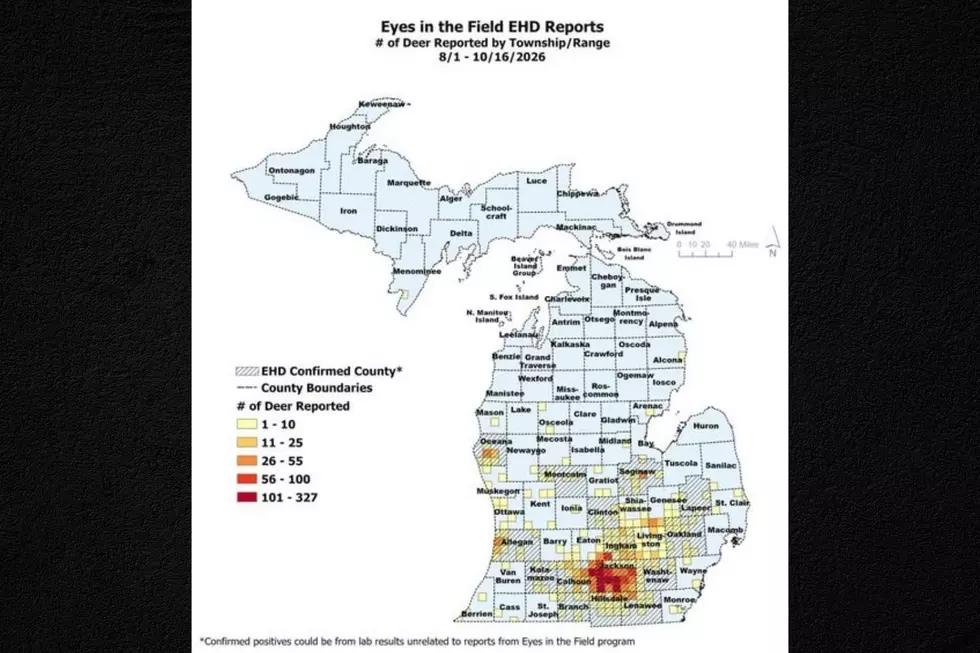
The township-level map gathers suspected EHD reports and marks counties with confirmed cases, including Jackson and Ingham.
Think of it as neighbors comparing notes. It's useful, but it doesn't count all deer deaths in Michigan. An empty spot on the map doesn't mean everything is fine.
What Michigan Hunters Should Know About EHD
Tiny biting midges spread the virus. EHD can hit one pocket of woods hard while deer a short distance away see little impact. That's why your own scouting still matters when deciding what to harvest.

There's some reassurance for the freezer, too: the DNR says deer from affected areas remain safe to eat if they show no signs of illness. Don't consume an animal that shows signs of being sick.
How Michigan Residents Can Help

EHD doesn't infect people, dogs, or cats. Sick deer often run high fevers and head for water, so you may find them near ponds or creeks.
RELATED: Can Michigan Hunters Use Drones to Scout or Recover Deer?
If you spot a sick or dead deer, report it through the DNR's Eyes in the Field system. Keep reporting even if your county already has confirmed EHD.
You don't need a hunting license to help keep tabs on Michigan's deer.
Michigan's 2025 Car - Deer Accidents: Crashes Per County
Gallery Credit: Scott Clow